Most SaaS founders don’t struggle because they lack data. They struggle because they’re looking at the wrong signals at the wrong time.
Revenue dashboards look healthy. MRR is going up. ARR projections feel comforting.
And then suddenly churn spikes, growth slows, and nobody understands when things started going wrong.
This usually happens because teams rely too heavily on lagging indicators and ignore leading indicators until it’s too late.
Let’s break this down properly without buzzwords, without theory overload, and from a founder’s point of view.
What Leading Indicators Actually Mean in SaaS
Leading indicators are early signals.
They don’t tell you what already happened they hint at what’s about to happen.
In SaaS, these indicators often show up before revenue moves.
They live inside user behavior, product usage, and engagement patterns.
Think of things like:
- Are users activating key features?
- Are they coming back after the first week?
- Is usage becoming habitual or fading?
- Are support tickets increasing before cancellations start?
These signals don’t appear on revenue reports, which is exactly why many founders miss them.
What Lagging Indicators Tell You (And Why They Feel Safer)
Lagging indicators are the outcomes.
They confirm reality after it has already played out.
Typical SaaS lagging indicators include:
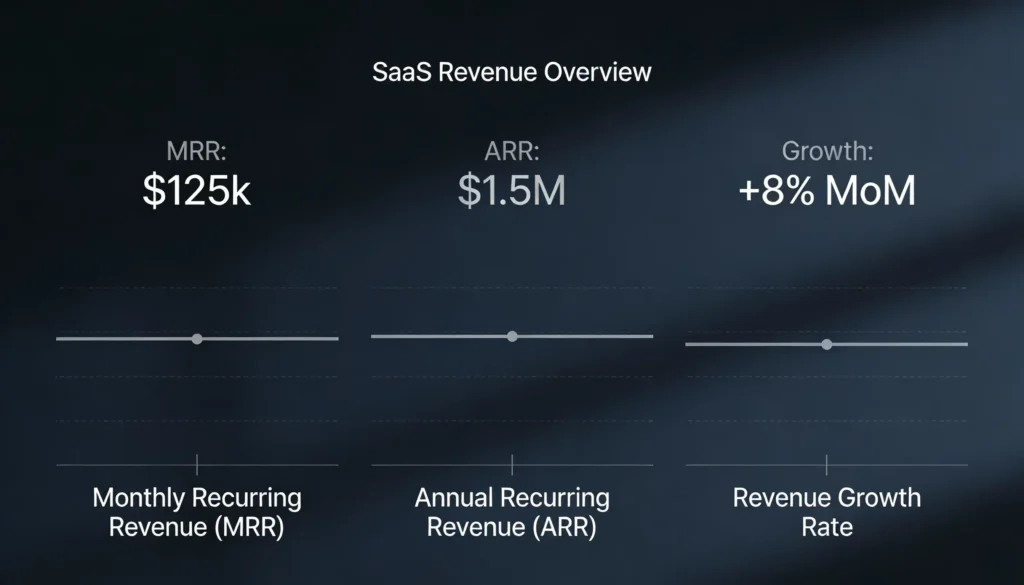
- MRR and ARR
- Revenue growth rate
- Churn rate
- LTV
- Expansion revenue
Founders naturally love these numbers because they feel concrete.
They’re easy to explain to investors. Easy to report to the team. Easy to track.But by the time these metrics change, the cause already happened weeks or months earlier.
These outcomes are usually reflected in core SaaS metrics, which founders rely on to understand past performance.
How Founders Usually Misunderstand This Difference
A common mistake is assuming:
“If revenue looks fine, the business is fine.”
In reality, revenue is often the last thing to react.
Many SaaS products experience:
- Declining feature usage
- Slower onboarding success
- Rising support friction
Long before revenue reflects the problem.
Real Examples of Leading Indicators in SaaS
Leading indicators don’t need to be fancy.
They need to be meaningful.
Examples include:
- Time to first value
- Feature adoption in the first 7–14 days
- Weekly active usage trends
- Drop-off points inside core workflows
- Increase in “how do I…” support questions
None of these directly show revenue.
All of them quietly predict what revenue will do next.
Common Lagging Metrics SaaS Teams Track
Lagging indicators still matter just not alone.
Common ones include:
- Monthly recurring revenue
- Gross churn
- Net revenue retention
- Customer lifetime value
- Expansion or contraction trends
They’re useful for validation, not prediction.
The problem starts when teams treat them as steering wheels instead of rear-view mirrors.

Why Early-Stage SaaS Should Care More About Leading Indicators
In early stages, numbers are small.
A single churned customer can distort reports completely.
That’s why early-stage SaaS teams benefit far more from watching behavioral signals than financial outcomes.
If:
- Users don’t reach value quickly
- Engagement feels forced
- Activation takes too long
Revenue growth will struggle even if it looks fine today.
Balancing Leading vs Lagging Indicators the Right Way
This isn’t about choosing one over the other.
A healthy SaaS setup looks like this:
- Leading indicators guide daily and weekly decisions
- Lagging indicators validate monthly and quarterly outcomes
Leading metrics show what to fix.
Lagging metrics confirm whether it worked.
This balance allows teams to align early signals with long-term SaaS growth metrics
The Mistake That Slows SaaS Growth the Most
The biggest mistake isn’t ignoring leading indicators.
It’s checking them inconsistently.
Signals only work when observed continuously, not occasionally.
Final Thoughts
If you only track lagging indicators, you’re always responding late.
If you obsess over leading indicators without context, you’ll overreact.
Strong SaaS growth comes from understanding which signals matter at which stage.
Revenue tells you what already happened. User behavior quietly tells you what’s coming next.
Smart founders learn to listen early.

A SaaS analyst covering product strategy, growth, and customer experience in modern software businesses. Focused on practical insights and real-world SaaS execution.