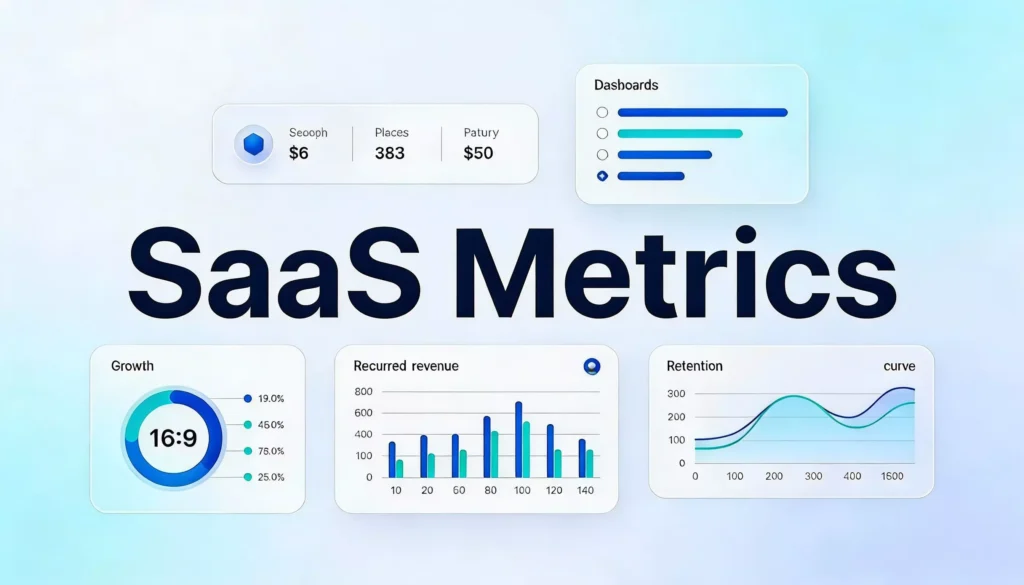
Most SaaS teams celebrate sign-ups. Some even celebrate onboarding completion. But very few pause to ask a more important question: did the user actually succeed?
Activation is not about accounts created or tutorials completed. It’s about whether a new user reaches a meaningful outcome one that proves the product is valuable for them. Without this moment, growth metrics look healthy on the surface while churn quietly builds underneath.
This is why SaaS activation metrics matter. They reveal whether early users truly understand the product, experience value, and are likely to continue using it.
What “Activation” Really Means in SaaS
Activation is often misunderstood. It is not a universal metric and it is not the same for every product.
In SaaS, activation represents the point where a user completes a core action that signals real intent and value. This action depends on the product’s purpose.
For example:
- In a project management tool, activation might be creating and completing a first project.
- In an analytics platform, it could be connecting a data source and viewing a first report.
- In a collaboration tool, it might be inviting teammates and sending a first message.
Activation is the bridge between curiosity and commitment. Users who cross this bridge behave differently from those who do not.

Why Activation Metrics Matter More Than You Think
Many SaaS companies focus heavily on acquisition and retention, but activation sits quietly in the middle. When activation is weak, retention strategies struggle and acquisition becomes expensive.
Activation metrics matter because they:
- Expose friction in onboarding flows
- Highlight gaps between marketing promises and product reality
- Predict long-term retention earlier than revenue metrics
Teams that ignore activation often chase growth symptoms instead of fixing root causes.
Core SaaS Activation Metrics to Track
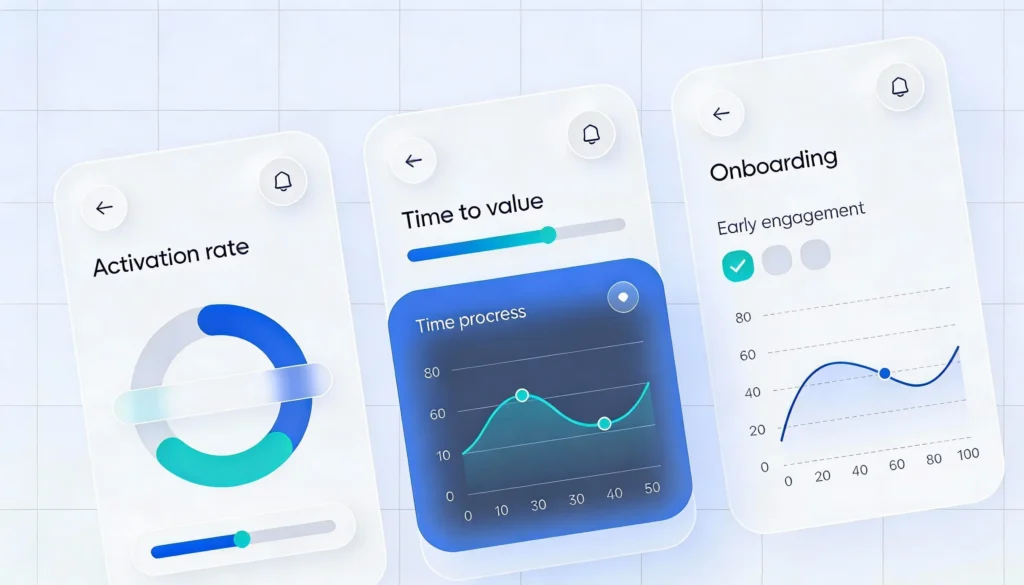
Activation Rate
Activation rate measures the percentage of new users who reach the defined activation milestone. A low activation rate usually signals confusion, complexity, or unclear value messaging.
Improving activation rate often delivers faster results than increasing traffic or ad spend.
Time to Value (TTV)
Time to value tracks how long it takes for a user to experience their first meaningful success. Shorter time to value usually correlates with stronger engagement and higher retention.
Products that guide users quickly toward value rather than overwhelming them with features activate users more consistently.
Onboarding Completion Metrics
While onboarding completion does not equal activation, it provides important context. Drop-off points during onboarding often reveal where users lose clarity or motivation.
Tracking onboarding metrics alongside activation helps teams identify which steps actually support success and which create friction.
Early Usage Engagement
Early engagement metrics track what users do immediately after signup. This includes:
- Feature usage frequency
- Session depth
- Interaction with core workflows
Strong early usage patterns often indicate that activation is meaningful rather than superficial.
Activation vs Onboarding: The Critical Difference
Onboarding explains how a product works. Activation proves why it matters.
Many SaaS products have excellent onboarding flows but weak activation because users never connect instructions with outcomes. Effective activation focuses on guiding users toward success, not just completion.
This distinction explains why reducing onboarding mistakes alone does not guarantee growth activation must follow.
How Activation Metrics Support Sustainable Growth
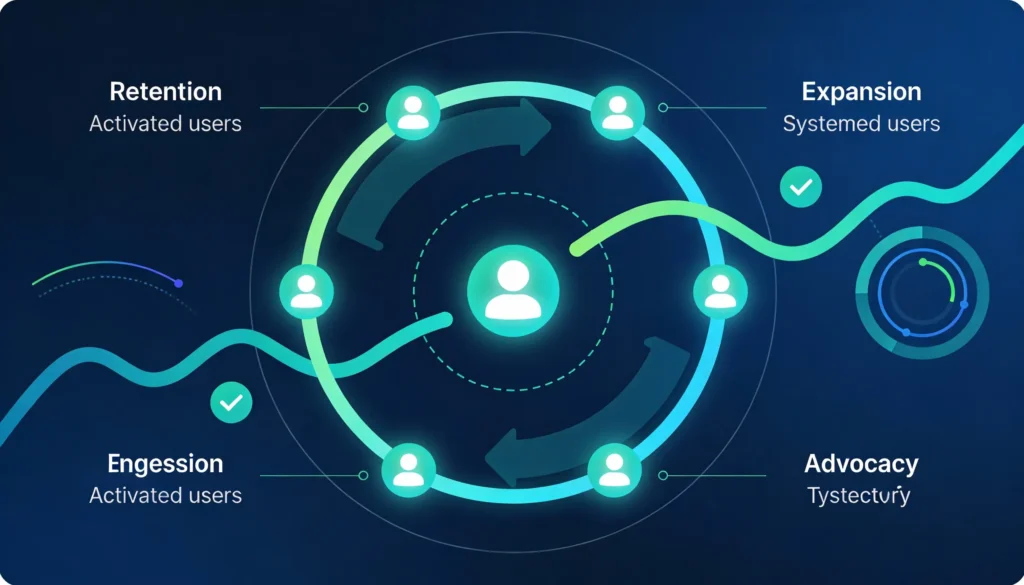
Activation metrics play a foundational role in long-term growth. Users who activate successfully are more likely to:
- Retain longer
- Expand usage
- Advocate for the product
This is why teams measuring growth beyond revenue often prioritize activation before optimizing retention or monetization strategies.
Strong activation also supports sustainable growth loops, where engaged users naturally reinforce acquisition and expansion over time.
Using Activation Data to Improve Product Decisions
Activation metrics should directly influence product and growth decisions. Teams can use activation insights to:
- Simplify onboarding flows
- Prioritize features that drive early value
- Align marketing messaging with actual product outcomes
These insights gain even more value when activation trends are reviewed in the context of broader key SaaS metrics across the product lifecycle.
Common Activation Measurement Mistakes
Even experienced SaaS teams make mistakes when tracking activation:
- Defining activation too early (e.g., login only)
- Using multiple activation events without clarity
- Ignoring qualitative feedback from early users
Activation metrics work best when they are simple, consistent, and closely tied to real user success.
Activation is not a vanity metric. It is one of the clearest signals of whether a SaaS product delivers on its promise.
By measuring activation thoughtfully and using it to guide onboarding, product design, and growth strategy, SaaS teams gain early clarity that prevents churn and supports long-term success.
Early success is not accidental it is designed, measured, and refined.

A SaaS analyst covering product strategy, growth, and customer experience in modern software businesses. Focused on practical insights and real-world SaaS execution.