SaaS growth rarely depends on a single team. While product, marketing, and support often operate with different goals, long-term success depends on how well these functions work together.
Misalignment between teams creates fragmented user experiences, unclear messaging, and slow decision-making. In contrast, SaaS Teams Align Product, marketing, and support build stronger feedback loops and scale more efficiently.
Why Alignment Matters in SaaS
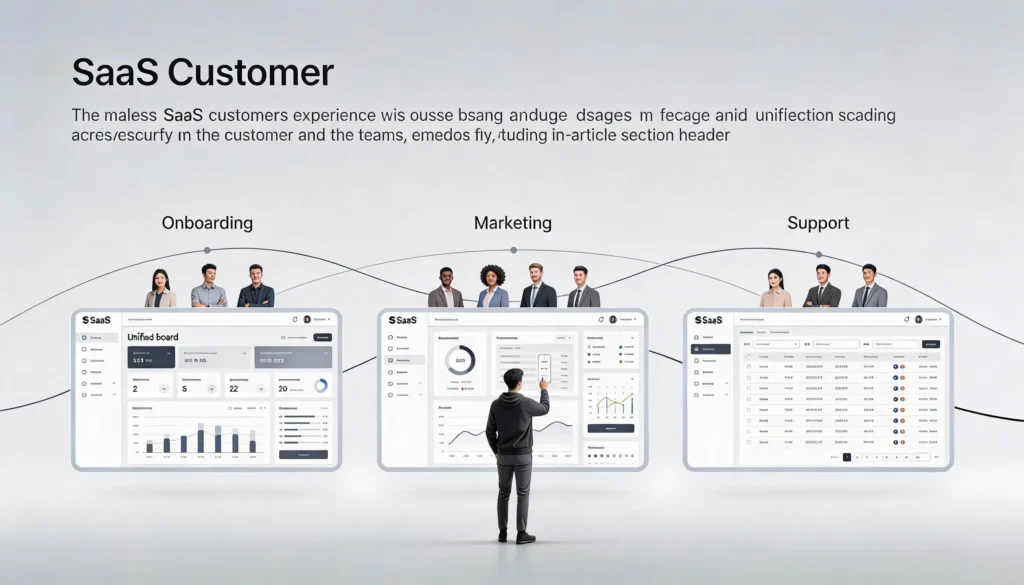
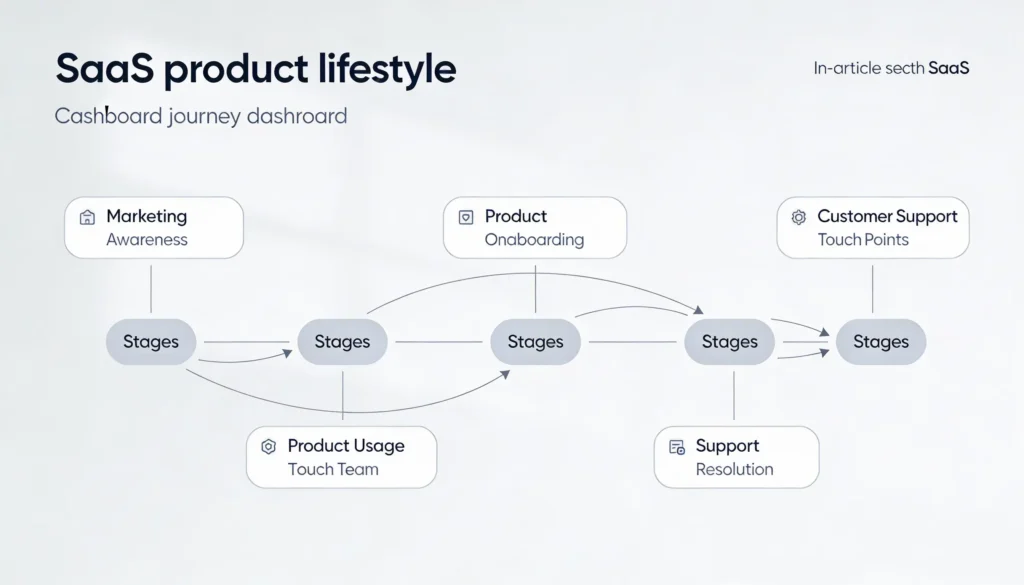
In SaaS, customers interact with multiple teams throughout their lifecycle. Marketing sets expectations, product delivers value, and support handles friction. When these experiences feel disconnected, users lose trust.
Strong alignment helps SaaS teams:
- Maintain consistent messaging
- Respond faster to customer support feedback
- Reduce friction across the user journey
- Support long-term retention and expansion
Without alignment, growth efforts become reactive rather than strategic.

The Role of Product Teams in Cross-Functional Growth
Product teams sit at the center of SaaS growth. Their decisions influence usability, feature adoption, and long-term engagement.
Aligned product teams:
- Share roadmap context with marketing
- Incorporate customer support feedback into prioritization
- Focus on solving recurring customer problems
This collaboration allows product teams to build features that reflect real customer needs rather than assumptions.
Marketing as the Connector Between Teams
Marketing plays a critical role in connecting internal teams with the external market. When aligned with product and support, marketing can communicate value more accurately and reduce churn caused by unmet expectations.
Effective product marketing alignment includes:
- Clear understanding of product capabilities
- Feedback from support on common objections
- Messaging that reflects real customer use cases
This alignment ensures that acquisition efforts attract users who are more likely to succeed with the product.
How Customer Support Strengthens Alignment
Customer support teams have direct visibility into user challenges. Their insights often reveal friction points that analytics alone cannot capture.
Support-driven alignment improves:
- Onboarding clarity
- Feature adoption guidance
- Customer experience consistency
When support feedback flows back into product and marketing discussions, cross-functional SaaS teams can address issues before they affect retention.
Creating Feedback Loops Across Teams
Alignment improves when teams share structured feedback rather than isolated opinions. Regular collaboration helps identify patterns across customer behavior and internal performance.
Common alignment practices include:
- Shared review sessions across teams
- Centralized documentation of customer insights
- Clear ownership of cross-functional initiatives
These feedback loops support a more cohesive SaaS growth strategy without increasing operational complexity.
Alignment and the Customer Experience
Customers do not experience teams separately. They experience a single product.
When product, marketing, and support align:
- Onboarding feels intentional
- Communication remains consistent
- Issues are resolved more efficiently
This level of coordination directly supports retention and long-term engagement.
Scaling Alignment as SaaS Teams Grow
As SaaS companies scale, alignment becomes harder but more important. New hires, new markets, and expanding feature sets increase complexity.
Successful SaaS teams scale alignment by:
- Defining shared goals across functions
- Maintaining clear internal communication
- Treating collaboration as an ongoing process
Alignment is not a one-time initiative. It evolves as teams and products grow.
Growth in SaaS is a team effort. Product builds value, marketing sets expectations, and support maintains trust. When these functions operate in isolation, growth becomes fragile. When they align, growth becomes sustainable.
SaaS companies that invest in cross-functional alignment build stronger products, reduce churn, and scale with greater confidence.

A SaaS analyst covering product strategy, growth, and customer experience in modern software businesses. Focused on practical insights and real-world SaaS execution.